WE’LL HELP YOU SPEAK DOG.

WE’LL HELP YOU SPEAK DOG.
PRIVATE TRAINING
Group classes can't solve problems that only happen in your home. Our 1-on-1 private training is the solution for complex behavioral issues like reactivity, anxiety, and resource guarding.
We start with a deep-dive assessment to find the root cause of the behavior. From there, we’ll design a custom, step-by-step plan for your dog's specific needs. Our method is about more than just obedience; it's about teaching you how to communicate effectively, build real confidence, and become your dog's strongest advocate. This is how we create lasting change.
TRAINING PACKAGES
3
sessions
$399
-
1 month commitment.
We recommend one session per week.
Package expires 1 month after our first session.
-
3 × 60-min private session
From your home/neighbourhood
Training plan
Weekly homework
Weekly check-ins
Live message support
6
sessions
$749
-
2 month commitment.
We recommend one session per week.
Package expires 2 months after our first session.
-
6 × 60-min private session
From your home/neighbourhood
Training plan
Weekly homework
Weekly check-ins
Live message support
9
sessions
$999
-
3 month commitment.
We recommend one session per week.
Package expires 3 months after our first session.
-
9 × 60-min private session
From your home/neighbourhood
Training plan
Weekly homework
Weekly check-ins
Live message support
*Prices do not include GST.
WHAT WE CAN HELP YOU WITH:
-
Excessive barking refers to a dog barking more than is typical or necessary, which can be disruptive and indicate underlying issues such as boredom, anxiety, fear, or a lack of proper training. It is important for dog owners to identify the triggers for the barking and address them through consistent training, socialization, and providing adequate physical and mental stimulation. Techniques such as positive reinforcement, desensitization, and teaching a “quiet” command can help manage and reduce excessive barking.
-
Resource guarding refers to a dog’s protective over possessions such as food, toys, or space, often resulting in growling, snapping, or aggressive postures when someone approaches. This behavior can stem from fear of losing the resource or past experiences of scarcity. Addressing resource guarding typically involves desensitization and counter-conditioning techniques teaching the dog that the presence of people near their resources leads to positive outcomes, thereby reducing their need to guard.
-
Mild aggression refers to behaviors such as growling, snapping, or stiff body posture that indicate a dog is uncomfortable or feels threatened but is not displaying full-blown aggression. It can be a warning sign that the dog is feeling anxious or defensive, and addressing it involves understanding the dog’s triggers and using positive reinforcement techniques to modify their behavior and build confidence.
-
Isolation Distress refers to a dog’s anxiety or stress when left alone or separated from their owner. This condition can manifest in behaviors such as barking, whining, destructive actions, or attempts to escape. It often arises from a lack of socialization or previous negative experiences with being alone, and it requires careful management and training to address.
-
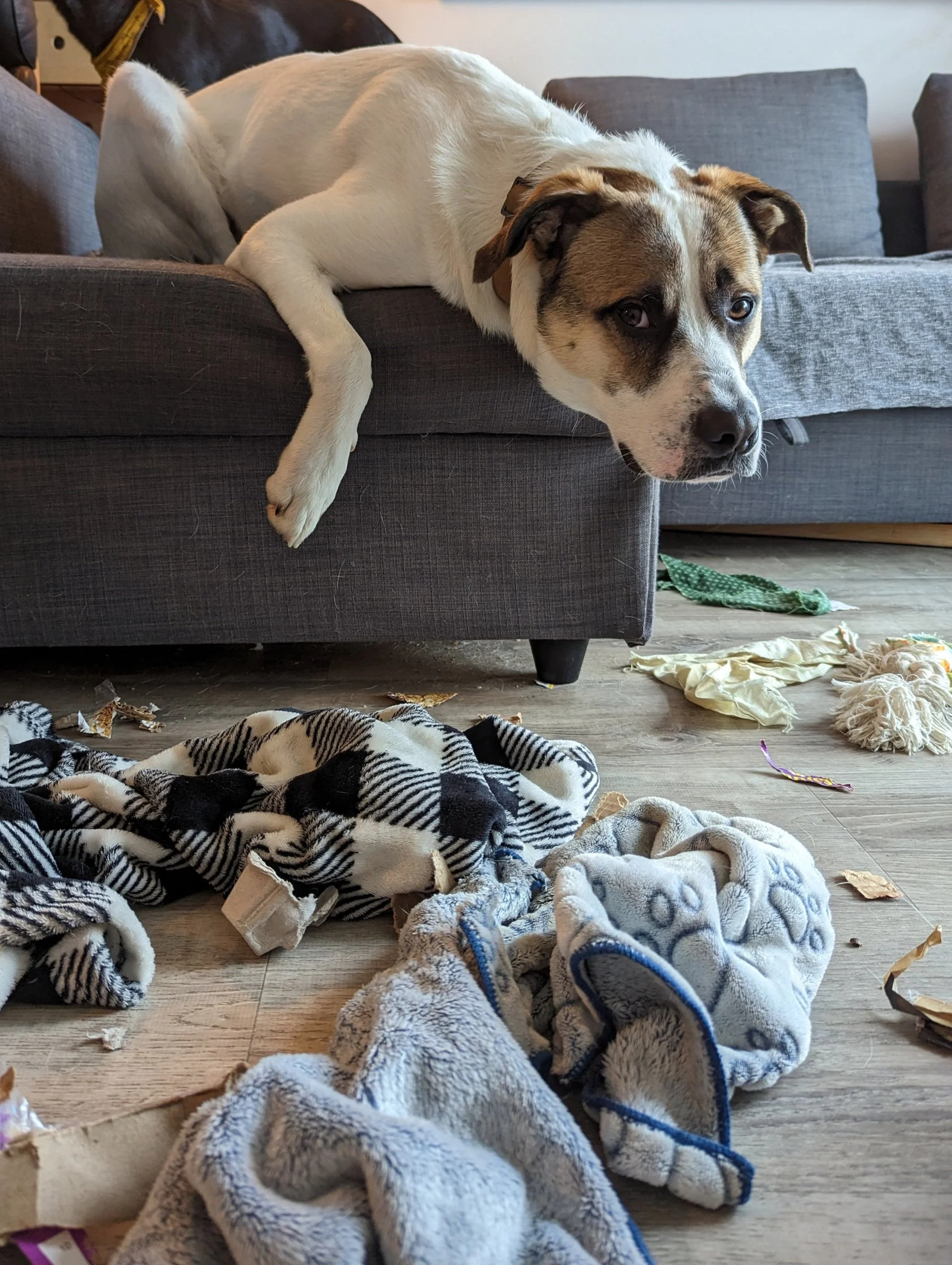
Destructive chewing refers to a dog’s tendency to chew on inappropriate items, such as furniture, shoes, or household items, often due to boredom, anxiety, or teething. It can be addressed through proper training, providing appropriate chew toys, increasing exercise and mental stimulation, and teaching the dog what is acceptable to chew on
-
Jumping on people is a common behavior where a dog leaps up to greet or solicit attention from humans. This behavior can be seen as friendly but is often undesirable, especially with larger dogs. Training to discourage jumping typically involves teaching the dog alternative greetings, such as sitting when approached, and reinforcing calm behavior through positive reinforcement techniques.
-
Overexcitement refers to a state where a dog becomes overly stimulated and exhibits exuberant behaviors, such as jumping, barking, or, often in response to certain triggers like visitors, toys, or the anticipation of playtime. This behavior can be managed through training that focuses on calming techniques, impulse control exercises, and reinforcing calm behavior to help the dog learn to their excitement.
-
Good puppy manners include behaviors such as sitting politely for greetings, waiting patiently for food or treats, not jumping on people, walking nicely on a leash, coming when called, and learning to settle down in various situations. Teaching these manners helps promote a well-behaved and socially acceptable dog, enhancing the bond between the puppy and its owner.
-
Reactivity refers to a dog’s overreaction to certain stimuli or situations, such as other dogs, people, or noises. This can manifest as barking, lunging, or growling, often due to fear, frustration, or excitement. Reactivity is typically addressed through training techniques that focus on desensitization and counterconditioning.
-
Mild separation anxiety refers to a dog’s stress or discomfort when left alone for short periods. Signs may include whining, pacing, or mild destructive behavior. Training techniques often involve gradual desensitization crate training, and positive reinforcement to help the dog feel more comfortable when separated from their owner.
-
Confidence building involves helping a dog feel secure and self-assured in various situations. This is achieved through positive reinforcement, socialization, exposing the dog to new experiences, and teaching coping skills. The goal is to reduce fearfulness and promote a calm, confident demeanor in the dog.
-
Recall refers to the command or training that encourages a dog to return to its owner when called It is an essential skill for safety and control, ensuring the dog comes back, especially in open or distracting environments.
-
Establishing boundaries involves setting clear rules and limits for your dog’s behavior to ensure safety and good manners. This includes defining what areas are off-limits, establishing commands for specific actions (like sitting or staying), and consistently enforcing these rules to help the dog understand acceptable behavior.
-
Jumping on furniture is a common sign of overexcitement lack of boundary training. To prevent this, we teach dogs to refrain from climbing on sofas, beds or other furniture unless given permission. This is often addressed through consistent training, setting boundaries, and using commands like “off” or “stay” to encourage appropriate behavior.
-
Crate training is a process used to teach a dog to accept a crate as a safe comfortable space. It helps with house training, prevents destructive behavior, and provides a secure environment for the dog when unsupervised. A crate should be introduced gradually, with positive reinforcement to create a positive association
-
Dog whining can indicate various emotions, such as anxiety, discomfort, or a desire for attention. In dog training it’s important to assess the cause of the whining and respond appropriately, whether by addressing the dog’s needs, reinforcing calm behavior, or teaching commands to help manage the behavior.
-
Potty training involves teaching them where and when to eliminate, typically outdoors in a designated area. It requires consistent scheduling, positive reinforcement for successful bathroom breaks, and supervision to prevent accidents indoors. The goal is to establish a reliable routine and encourage the dog to communicate their needs.
-
Leash reactivity refers to a dog’s tendency to react negatively, such as barking, lunging, or growling, when on a leash, often in response to other dogs, people, or stimuli. This behavior usually stems from excitement, fear, or frustration and can be managed through training techniques that promote calmness and focus.
-
Loose-leash walking is a training technique where a dog walks beside its owner on a leash without pulling. The goal is to maintain a relaxed leash, allowing for comfortable movement while encouraging the dog to stay close and focused on the handler. Positive reinforcement is often used to reward the dog for walking calmly alongside.
-
Chasing refers to a dog’s instinctive behavior to run moving objects or animals, which can include toys, balls, or even people. This behavior can be managed through training techniques that redirect the dog’s focus, teach impulse control, and reinforce appropriate behaviors, ensuring the dog does not become overly excited or distracted while on walks or in other situations.
-
Fear and anxiety refer to emotional responses that can lead to unwanted behaviors, such as barking, hiding, or aggression. Addressing these issues involves identifying triggers, using positive reinforcement, desensitization, and counter-conditioning techniques to help the dog feel more secure and confident in stressful. It’s important to proceed gradually and patiently to build the dog’s trust.
-
Biting and nipping refer to unwanted behaviors where a dog uses its teeth to grasp or injure people or other animals. These behaviors can stem from play, fear, or frustration. Training focuses on teaching bite inhibition, redirecting the dog’s energy to appropriate toys, and reinforcing calm behavior to prevent these actions. Consistency and positive reinforcement are key in managing and correcting biting and nipping.
-
Ignoring a command occurs when a dog does not respond to cues or commands given by its handler. This can be due to various factors, such as distractions, lack of motivation, or insufficient training. To address this, trainers often use positive reinforcement, consistency, and gradually increasing distractions to encourage the dog to pay attention and respond appropriately.
-
Learning tricks involves teaching dogs specific behaviors or actions on command, such as “spin,” “shake,” or “roll over.” This process enhances communication, strengthens the bond between the dog and owner, provides mental stimulation. Positive reinforcement, including treats and praise, is commonly used to encourage and reward the dog during training.
Is KRU right for you?
-
Absolutely not. While it's great to start early, dogs of any age, from puppy to senior, can learn and change their behavior. We focus on understanding the motivation behind the behavior, which works regardless of how long the habit has existed. It's never too late to teach a dog a better way.
-
Group classes often fail because they don't address the core behavior issue in your home. We focus on private, 1-on-1 sessions in the actual environment where the problems happen. We train you to be the expert leader in your dog's life, which is the only way to get results that last.
-
Yes, and it's essential. Positive Reinforcement is the most ethical and effective method for complex issues like anxiety and fear-based reactivity. We are not just teaching tricks; we are changing how your dog feels about the trigger, leading to permanent, confident behavior, not just temporary obedience.
-
We believe so. You are paying for efficiency and expertise. You save travel time, you eliminate distractions, and you address the problem in its root environment (your living room). This dramatically accelerates progress, which ultimately saves you time and money compared to months of ineffective group classes.
-
Training is a team effort! While our sessions are focused, the consistency you provide daily is the magic ingredient. We provide clear, simple "homework" designed to fit your schedule. Expect to commit 10-15 minutes, 2-3 times a day to see the fastest, most durable results.