Condo Canine: A Trainer’s Guide to Solving Separation Anxiety in High-Density Vancouver
Is your biggest stressor not rush hour, but the sinking feeling when you hear your phone buzz with a noise complaint from your strata? If your dog turns into a furry alarm clock the second you leave, you’re dealing with anxiety.
First, let’s be clear: This is a panic attack, not malice. Your dog isn't trying to punish you for leaving; they are genuinely terrified of being alone. This panic is amplified in high-density Vancouver living because every passing hallway noise or footstep outside the door can raise their baseline anxiety.
The good news? This is treatable. We approach this challenge with empathy, patience, and a clear, structured plan.
1. The Condo Canine Diagnosis: Is It Distress or True Anxiety?
Understanding the severity is key, as it determines the treatment.
The Key Distinction
Separation Anxiety
Symptoms: Frantic escape attempts (leading to injury), severe drooling, pacing, or immediate panic before you leave.
Root Cause: True panic disorder and fear of abandonment.
Isolation Distress
Symptoms: Primarily vocalization (barking/whining), mild destructive chewing, or elimination that starts 10-15 minutes after you leave.
Root Cause: Loneliness, boredom, or frustration.
*Crucial Note: If left unchecked, Isolation Distress can quickly worsen and lead to a true panic disorder full-blown; Separation Anxiety.
When to Call the Experts
While KRU Dog Training is highly skilled in behavior modification, we prioritize your dog’s mental health and safety:
Trainer Intervention (KRU’s Scope): We can effectively help with Isolation Distress and Mild Separation Anxiety by implementing management protocols, confidence-building exercises, and counter-conditioning.
Veterinary Behaviorist (VBB): If your dog is exhibiting signs of self-harm, severe physiological signs (excessive drooling, frantic pacing), or destroying property extensively, the anxiety may require medical support alongside training. We will always advise a consultation with a Veterinary Behaviorist or certified professional when necessary.
2. Your 3-Step Plan for Calm Departures
The goal of our plan is to teach your dog that being alone is safe and boring, not terrifying.
Step 1: Build the "Happy Place" (Safe Space Training)
Your dog needs a designated area (a crate, a dog bed, or a small room) that they associate only with high-value, calming things.
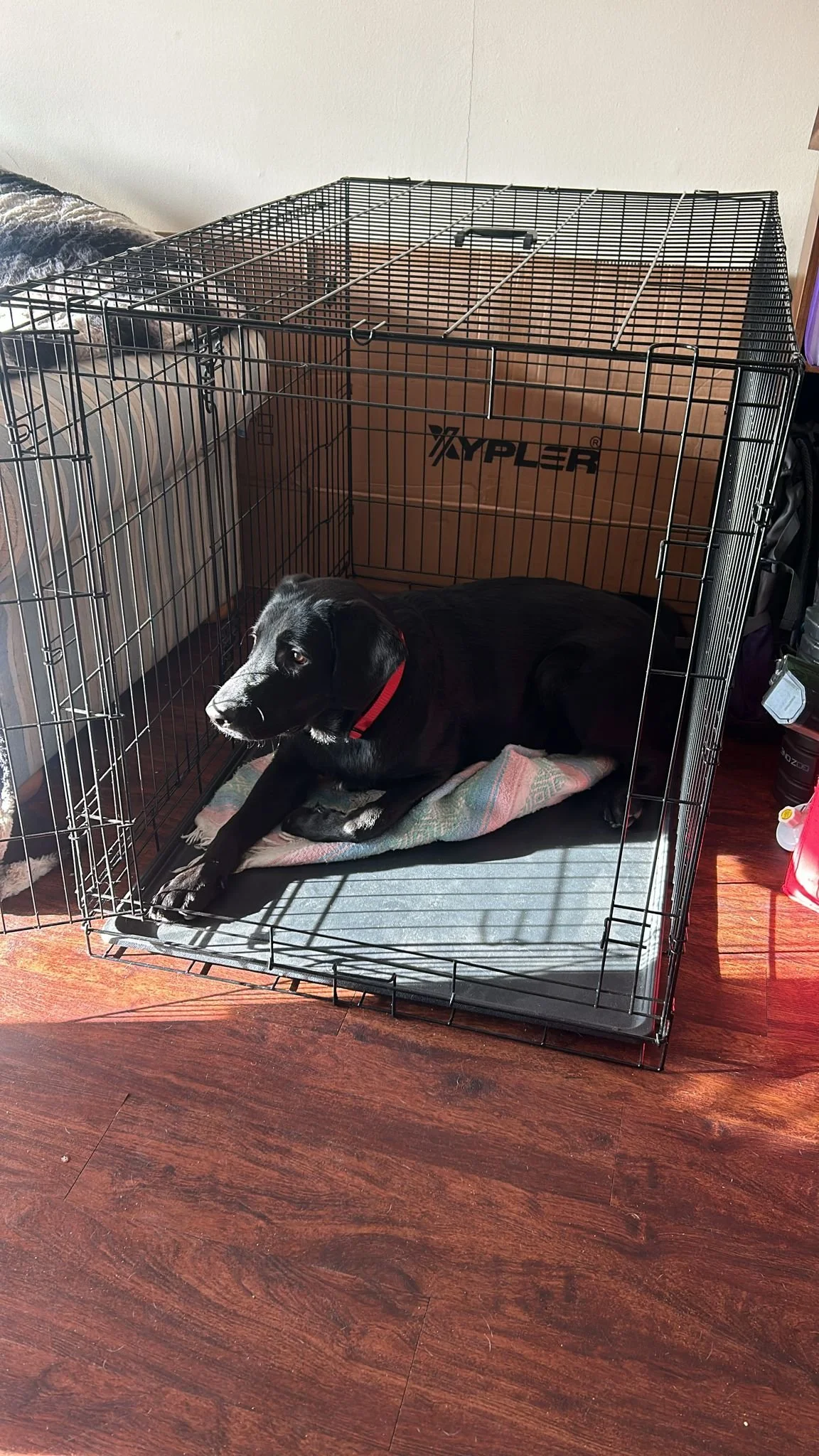
When set up and used properly, crating time becomes the best, most consistent thing in a dog’s world!
Step 2: Desensitize the Departure Cues
Your dog starts panicking the moment they hear the jingle of your keys. We need to neutralize those "leaving cues."
The Goal: Teach your dog that keys, shoes, and jackets no longer predict abandonment.
The Method: Pick up your keys, put on your coat, or walk to the door—and then don't leave. Sit back down. Repeat this 20-30 times a day until these actions become meaningless noise. This is called desensitization.
Step 3: The 30-Second Game (Graduated Exposure)
Once your dog is comfortable with the cues, you practice short, low-stress departures.
The Goal: Prove that you always come back, starting small.
The Method: Leave for 30 seconds. Come back before your dog panics. Don't make a big deal of leaving or returning. When they are calm for 30 seconds, increase it to 1 minute. You must always return while they are calm. This is the essence of graduated exposure.
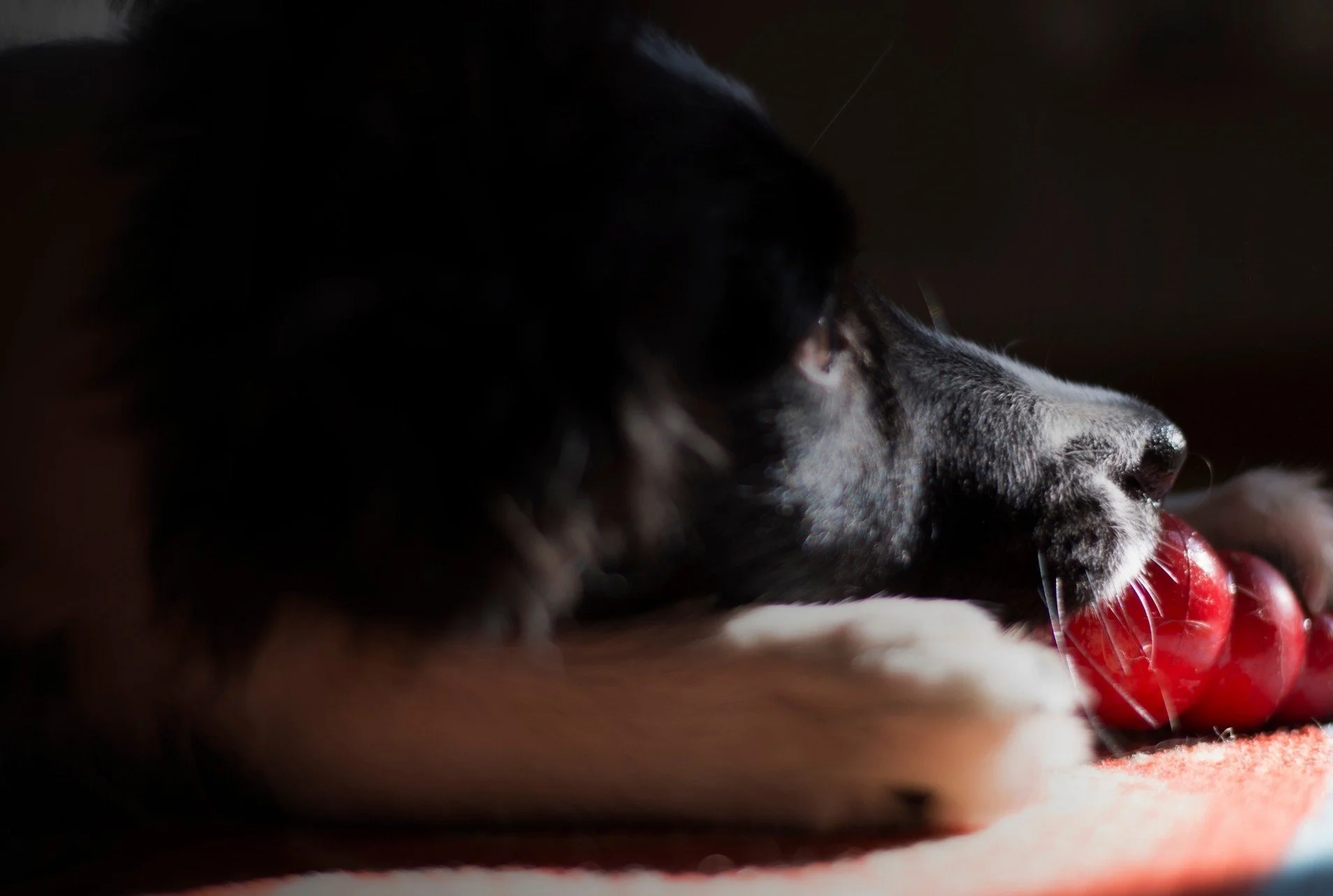
Canine Enrichment toys like Kong’s are a must-have for anxious, bored pups.
When You Need Expert Help
I know this sounds like a lot, and managing separation anxiety can feel isolating and overwhelming. The truth is, it requires perfect timing, consistency, and a custom plan.
You don't have to navigate this alone. If you're ready for a personalized, 1-on-1 plan that is designed to fit your unique schedule and condo environment, I'm here to help.
CITATION NOTE: Research from the American College of Veterinary Behaviorists (ACVB) confirms that DS/CC and counter-conditioning are the most effective treatments for Separation Anxiety, validating your method.
