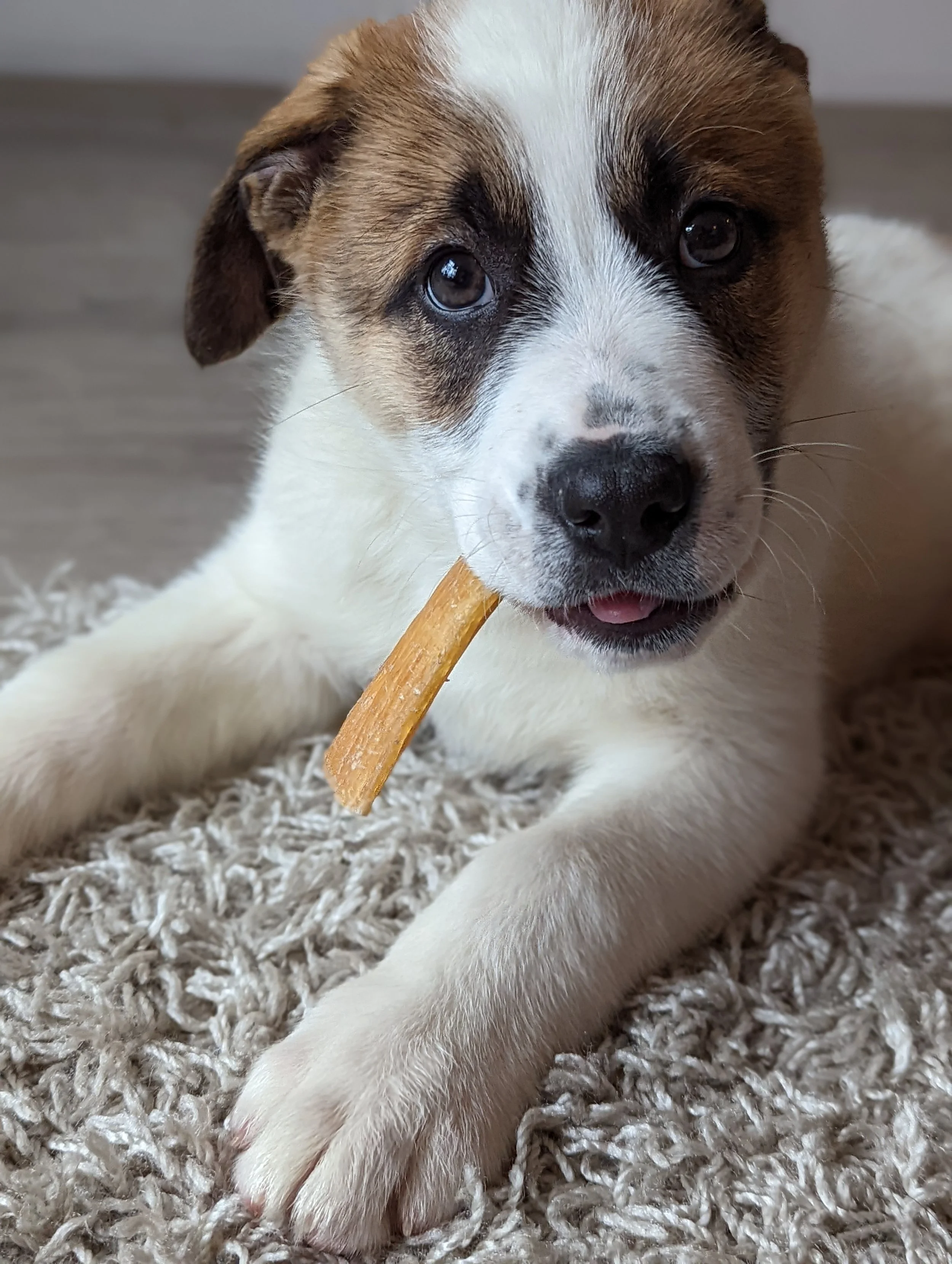
Surviving the Land Shark Phase: A Positive Reinforcement Guide to Puppy Nipping and Biting
If your hands and ankles are covered in tiny scratches, if your puppy seems to be 90% teeth, and if you’ve considered trading your sweet new pup for a tiny crocodile; you’ve officially entered the Land Shark Phase.
First, let's take a breath. It feels aggressive, but nipping is completely normal. It's how puppies explore the world and learn bite inhibition (how hard they can bite before it hurts). It’s not malice. It's just a learning curve that, thankfully, we can teach them to navigate.
1. The Diagnosis: Why Does My Puppy Bite Me?
Nipping usually stems from two root causes:
Exploration & Teething: A puppy’s mouth is like a toddler’s hands. They are using their teeth to learn about texture, pressure, and the boundaries of their environment.
Overarousal & Fatigue: This is the biggest factor most owners miss. Hyper-nipping is often the last-ditch attempt of an exhausted puppy to self-regulate.
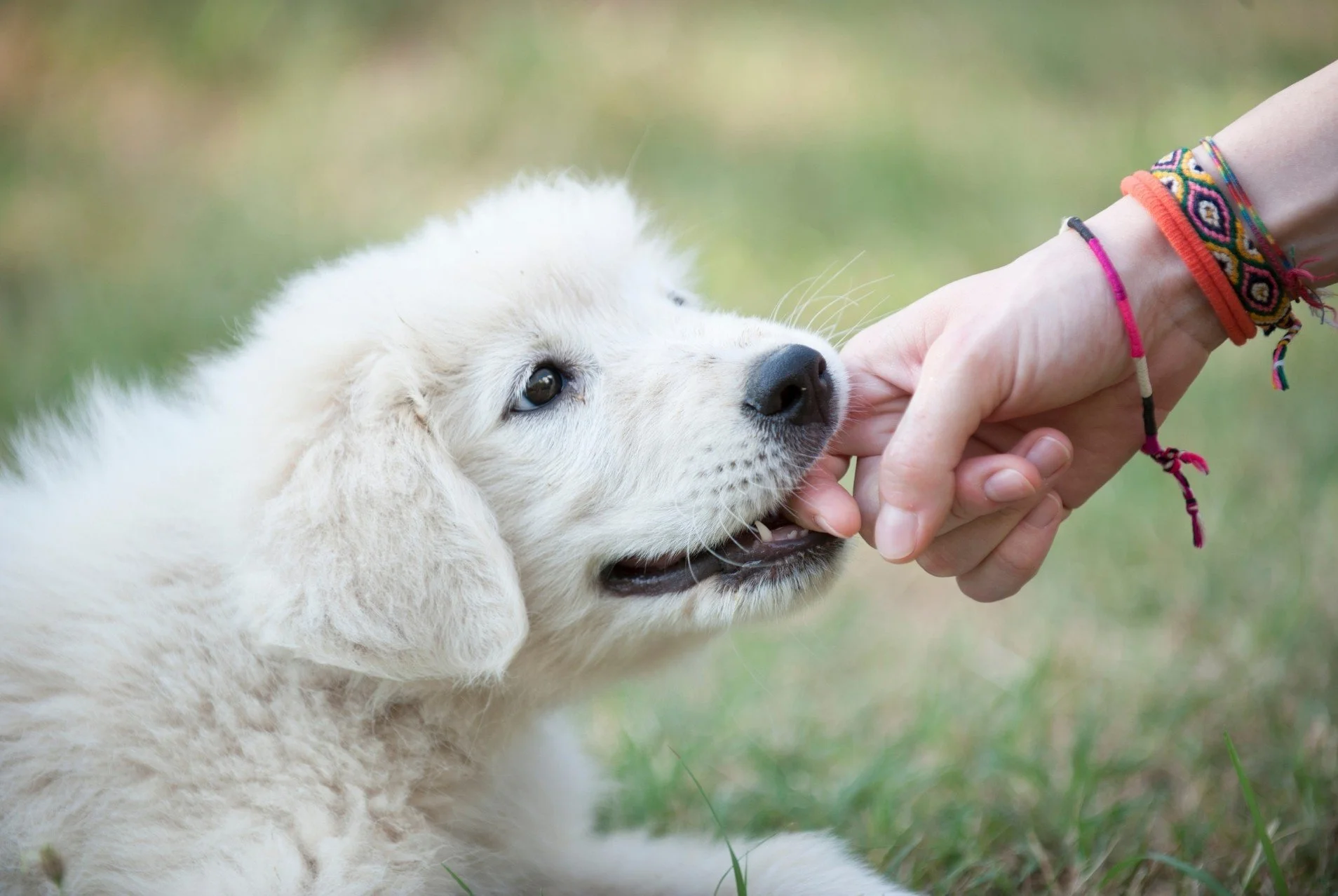
Exploring the world with their razor-sharp teeth is a crucial step in a puppy’s developmental stage.
2. Your 3-Step Treatment Plan (The Prescription)
We're going to use positive reinforcement to teach your puppy that human skin is sensitive and that appropriate items are far more rewarding than your hands.
Step 1: Teach Bite Inhibition (The 'Reverse Time-Out')
We need to teach your puppy that biting hard makes the fun stop.
The Reaction: The instant your puppy’s teeth touch your skin—even lightly—let out a sharp, high-pitched "OUCH!" or "YIP!"
The Action: If the puppy tries to bite again, stand up and walk out of the room for 10-20 seconds.
The Message: You are teaching them: "When you bite that hard, the game, the fun, and my presence immediately disappear."
Step 2: Solve for Overarousal (The Mandatory Nap)
If your puppy is hyper-biting, they are overtired and likely need sleep, not more play.
The Diagnostic: If the biting is frantic, accompanied by zoomies, or ignoring treats, it’s naptime.
The Prescription: Gently guide your puppy to their crate, a penned area, or their "safe place" for a mandatory nap. Most young puppies need 18-20 hours of sleep per day. Enforced naps are a non-negotiable tool for managing the "land shark" hour.
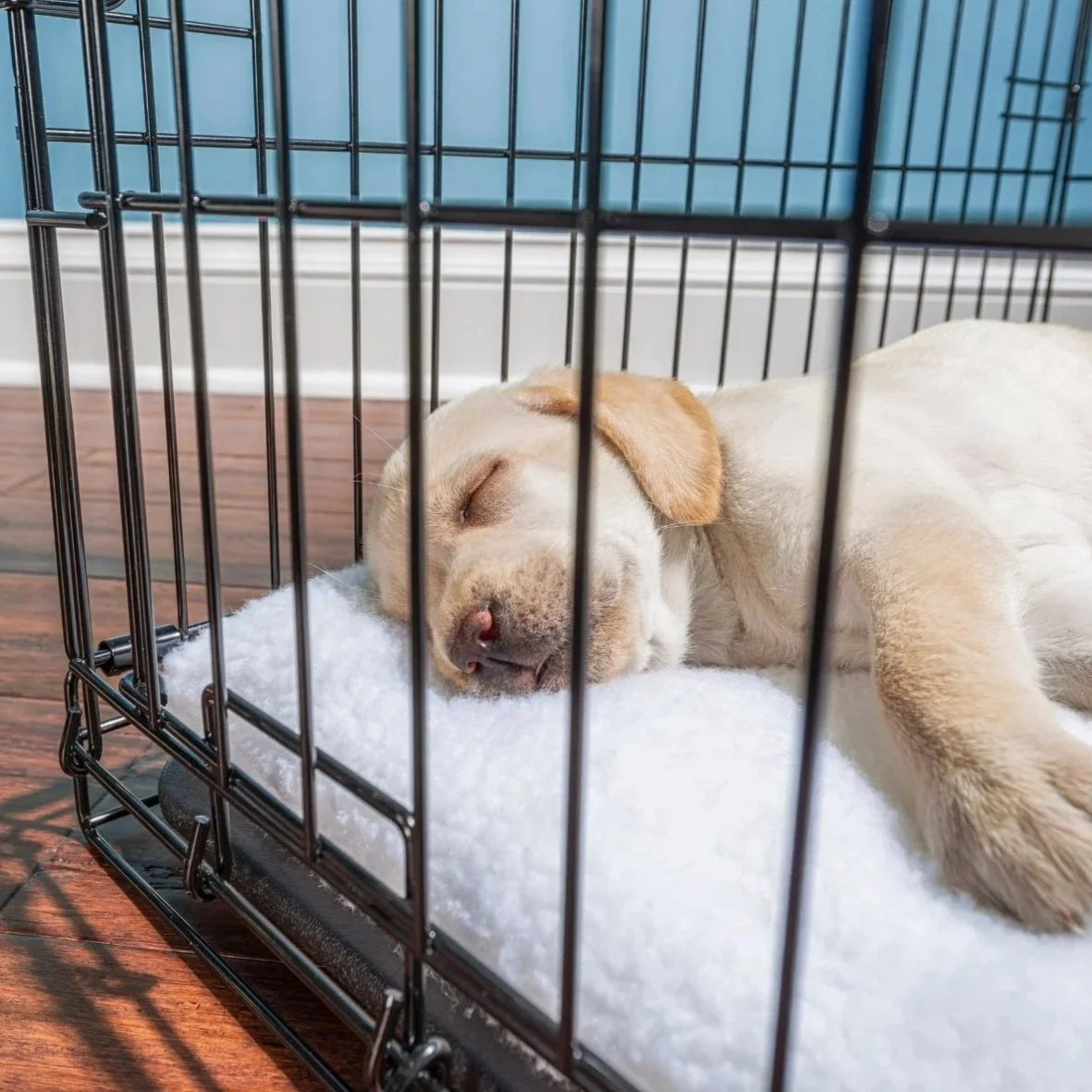
Puppyhood is the best time to start Crate Training! It is the easiest time to start and will prevent many other behavioral issues from taking root.
Step 3: Redirect and Substitute (The Chew Swap)
Puppies need to chew. We just need to give them a job they can actually do.
The Toolkit: Keep a supply of appropriate chews on you at all times (Kong’s, chew toys, hard bones).
The Swap: If your puppy tries to bite you, do not engage. Immediately put a highly enticing, appropriate chew toy right in their mouth. You are teaching them: "I will give you something amazing to chew on, but my hands are not it."
3. The Foundation of Freedom: Management
The goal of management is simple: prevent mistakes before they happen. We need to prevent the practice of bad habits while simultaneously building good ones.
The House Line: A lightweight 6-foot leash (that your puppy drags around indoors) is your best friend. It gives you a quick, non-confrontational way to interrupt a behavior (like chewing a shoe) without having to chase or wrestle them.
Strategic Confinement: Use crates and baby gates generously. These are not punishments; they are essential safety tools. They prevent your puppy from practicing unwanted behaviors (potty accidents, destruction) until you are confident in their training.
Earning Access: Think of access to your home as a privilege that is earned. Start by supervising your puppy 100% in one or two rooms. As they prove reliable, you slowly grant them access to the next room. This prevents you from being overwhelmed and sets your puppy up for success.
4. When to Call the Specialist
Nipping is normal, but aggression is not.
If you are dealing with snarling, growling, or resource guarding (aggressively protecting toys or food), you are past the land shark phase and dealing with a deeper behavioral issue. Your ultimate goal is not just to survive puppyhood, but to build the confident, trustworthy relationship that lasts a lifetime.